|
I occasionally like to punish myself by looking at comments on news articles. The bulk of the submissions seem to come from pro-MAGA accounts (or bots) that somehow manage to frame every story as a Trump win, often with contortionist-like dexterity.
I took one such plunge on Saturday as news was breaking about the murder of Melissa Hortman and her husband in Minnesota. Countless commenters expressed confidence that the massacre had been carried out by a Democrat despite having almost no facts. It was in the face of this disinformation that I found myself making an ominous remark to my wife: “This country is ripe for a Reichstag.”
I was referring to the 1933 Reichstag fire, when Germany’s parliament building was set ablaze by a communist agitator. The Nazis used the incident to claim a communist uprising was underway and pressured President Paul von Hindenburg to issue a decree suspending civil liberties, putting their democracy on the fast track to authoritarianism.
I know comparisons to Nazi Germany are tricky business. Mike Goodwin infamously said that raising the spectre of Hitler is the best way to lose an argument. But historian Timothy Snyder takes a different view. He said in 2020 that while comparisons to Nazi Germany are imperfect, they can also be instructive.
“History is a huge resource of patterns,” Snyder said. “It’s a way to try to get your bearings, in a moment like the present one, where we’re not really sure what’s going on.”
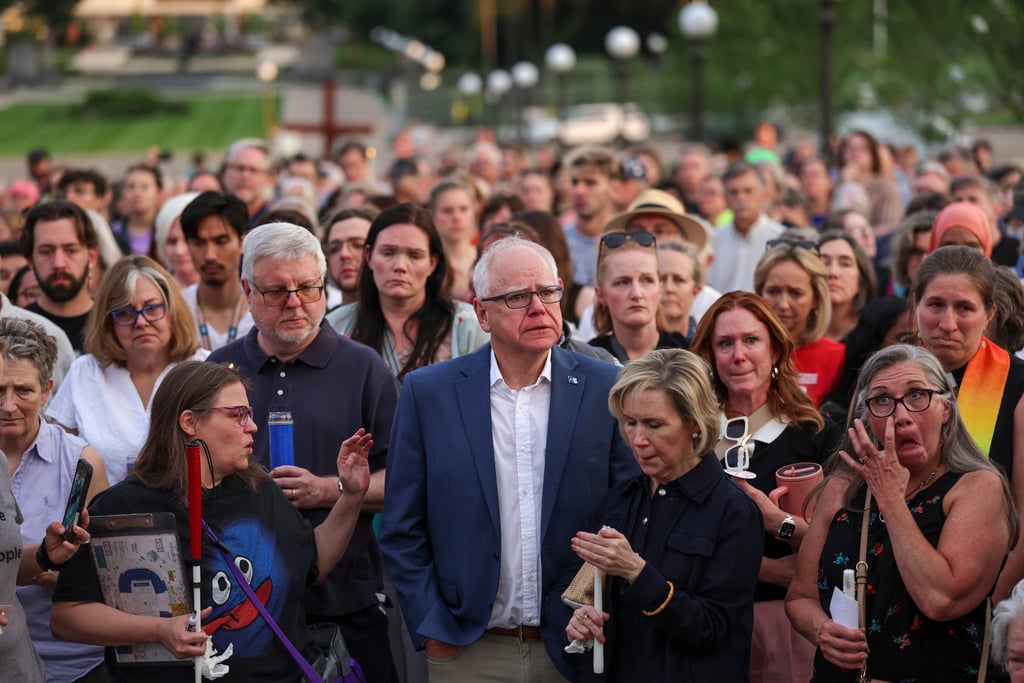
The alleged gunman in Minnesota, who was arrested on Tuesday, is an anti-abortion extremist and reported Trump voter. He had a hit list of prominent left-wing politicians. He also had fliers for local No Kings protests, suggesting that he maybe wanted to target anti-MAGA demonstrators as well.
These facts haven’t penetrated the online right, who have chosen instead to latch onto an array of baseless conspiracy theories, including that Gov. Tim Walz and the shooter are “friends” or that the murder had the markings of a “professional hit.”
Most historians agree that the Reichstag fire was the work of a lone arsonist with a history of mental illness. But at the time, public opinion in Germany was bitterly divided. Journalists and left-wing politicians argued that he acted alone, while the Nazis — who controlled the government and much of the press — spread a false narrative that conveniently served their political agenda.
All of this shows just how essential a shared sense of reality is for a democracy to function. In Weimar Germany, that shared reality collapsed — and now it feels like we’ve lost ours too. We saw other signs of this collapse this week — most notably Trump claiming that Iran is close to obtaining a nuclear weapon, even though his own intelligence director says otherwise.
How we escape this perilous dynamic isn’t clear. But one place to start is with Democrats focusing on the few shared experiences Americans have left — high rent, overpriced groceries, garbage health care — and trying to build some kind of consensus around those things.
Until then, I fear we’ll only grow more primed for a Reichstag moment. |